
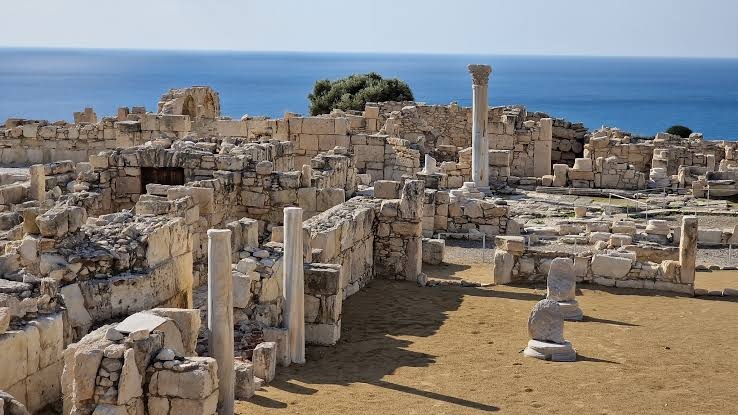
Why Visit Kourion? Kourion combines several things that make an archaeological site memorable: impressive ruins, fascinating history, beautiful mosaics, a spectacular theatre and an exceptional setting. What is Kourion in Cyprus? Kourion is one of Cyprus’s most spectacular ancient archaeological sites, occupying a dramatic hilltop position overlooking the Mediterranean west of Limassol. It was one of the island’s important ancient city-kingdoms and developed into a substantial centre with public buildings, villas, theatres and religious monuments. Today, visitors can explore the remains of its Greco-Roman theatre, Roman villas, mosaics, baths, agora and early Christian basilica. Kourion is particularly memorable because of its setting. The archaeological remains stretch across a hillside overlooking the coast, combining impressive ancient architecture with sweeping views across the surrounding countryside and Mediterranean. The History of Kourion Kourion was one of the ancient city-kingdoms of Cyprus and occupied a strategically important position overlooking the fertile valley of the Kouris River. Archaeological evidence indicates a long history of settlement, while ancient traditions connected the inhabitants of Kourion with Greek origins. Over time, the city came under the influence of different powers that controlled Cyprus. The city flourished during the Hellenistic and Roman periods, when its buildings and public spaces were expanded and developed. A major earthquake in 365 AD caused extensive destruction and marked an important turning point in the history of Kourion. The Theatre of Kourion The most recognisable structure at Kourion is its spectacular Greco-Roman theatre. The original theatre was constructed in the 2nd century BC and was subsequently enlarged during the Roman period. It could accommodate thousands of spectators and was an important venue for performances and public entertainment. The theatre has been extensively restored and is still used for performances and cultural events, particularly during the summer. Standing among the curved rows of seats, with the landscape and sea beyond, makes it easy to appreciate why the location was chosen. It is one of the most atmospheric ancient theatres in Cyprus. The House of Eustolios Close to the theatre is the House of Eustolios, one of Kourion’s most interesting buildings. Originally a private residence, it was transformed into a public recreation complex during the Early Christian period. The remains include rooms, baths and beautifully decorated mosaic floors dating to the 5th century AD. The bathing complex provides an insight into the sophisticated facilities available within the ancient city. Visitors can still see parts of the original heating system, including the hypocausts used to circulate hot air beneath the floors. The House of Achilles The House of Achilles takes its name from a mosaic depicting the legendary Greek hero Achilles. The building dates from the 4th century AD and appears to have had an important social or official function. Its mosaics provide another glimpse into the artistic traditions of Roman Cyprus and the popularity of Greek mythology. The House of the Gladiators Another impressive villa is the House of the Gladiators, named after mosaics depicting gladiatorial combat. The scenes provide a fascinating reminder of the entertainment enjoyed by people living in Roman Cyprus. The house itself included an atrium and bath facilities, while earthquakes caused significant damage to parts of the building. The Roman Agora The Roman Agora was an important public area of Kourion. The remains include the foundations and columns of buildings that once surrounded the public space. Nearby are the remains of a Nymphaeum, a monumental structure associated with water and the Roman tradition of public fountains. Exploring this part of the site helps demonstrate that Kourion was not simply a collection of private houses. It was a functioning city with public spaces, religious buildings and civic facilities. Early Christian Kourion Kourion continued to be inhabited after the Roman period and became an important Christian centre. The remains of an early Christian basilica date from the 5th century and include a separate baptistery. The building is thought to have served an important religious role within the city. Its presence illustrates how the character of Kourion changed as Christianity became established across the Roman Empire. The Views from Kourion One of the things that sets Kourion apart from many archaeological sites is its location. The ancient city sits high above the coast, providing broad views over the Mediterranean and surrounding countryside. The combination of ancient stone ruins, open landscape and sea makes Kourion particularly impressive for photography. The setting also helps visitors understand the strategic importance of the ancient city. Visiting Kourion Kourion is located around 19 kilometres west of Limassol on the road towards Paphos. The site is open throughout the year, although opening hours vary between the summer and winter seasons. The Cyprus tourism authorities recommend allowing enough time to explore the wider site rather than simply visiting the theatre. The villas, mosaics, agora and basilica are all worth seeing. The nearby Sanctuary of Apollo Hylates can also be combined with a visit to Kourion, making this a particularly good area for exploring the ancient history of the region. For anyone interested in the history of Cyprus, Kourion is one of the island’s essential archaeological sites. You can stand inside a Roman villa, walk through ancient public spaces and then look out across the Mediterranean from the same hillside. On a clear day you see across the Limassol peninsula and we have even seen the Red Arrows practicing over this area! https://youtu.be/9u3Ixvdv0_Y?si=oGDlFS91pLulZfcA

Hala Sultan Tekke, Larnaca
Discover Hala Sultan Tekke, a peaceful lakeside mosque on Larnaca’s Salt Lake. Explore its history, serene gardens and stunning views. When the lake fills, after the winter rains, many species of birds can be seen including Flamingos. Hala Sultan Tekke: A Peaceful Lakeside Sanctuary in Larnaca Hala Sultan Tekke is one of the most important and peaceful spiritual sites in Cyprus. It is set right on the edge of the beautiful Larnaca Salt Lake. Whether you’re visiting for the history, the architecture or simply the calm atmosphere, this landmark is well worth adding to your itinerary. The complex was originally built between 1700-1800. It was restored in the early 2000’s, as recognition that honoring the past is the path to a peaceful future. The Tekke is dedicated to Umm Haram, a revered figure in Islamic tradition. The mosque itself is elegant and understated. Surrounded by palm trees, gardens and stone pathways making the whole area feel tranquil and reflective. Even if you’re not religious, the setting creates a genuine sense of calm. One of the highlights is the view across the Salt Lake. In winter, the lake fills with water and attracts impressive flocks of pink flamingos. This turns the landscape into a photographer’s dream. In summer, the lake dries up, leaving a shimmering layer of white salt that looks almost otherworldly. Hala Sultan Tekke is easy to reach from Larnaca. It is just a short drive from the city and close to the airport, you can take a 5 minute detour on your way home. It’s a peaceful escape from the busier tourist spots and a lovely place to explore if you’re interested in culture, nature and a bit of quiet beauty. There are many stray cats in the outer courtyards, which are looked after by volunteers. A Few Tips For Your Visit A tranquil site with well maintained gardens, many cats, ancient village ruins, mosque and mausoleum. This is an active religious site and the most important place of Muslim worship in Cyprus. Please be respectful of those in prayer. While FREE to enter, and non Muslims may go inside the mosque visitors area, appropriate dress MUST be worn. This means knees and shoulders should be covered – no shorts and a shawl over beach clothes is NOT sufficient – the guard at the entrance will turn you away if you are deemed disrespectful. The Tekke is directly next to the Larnaca salt lake which is an important ecological site. You can admire the lake from the shores, but DO NOT walk on the salt flats as this damages the ecosystem.
Tombs of the Kings, Paphos
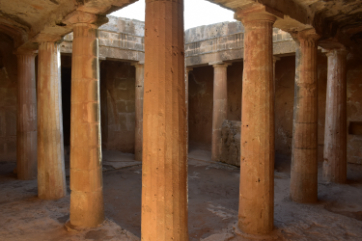
Why Visit the Tombs of the Kings? The Tombs of the Kings is one of those attractions where the architecture is as impressive as the history behind it. Walking down into a huge rock-cut courtyard surrounded by ancient columns gives you a very different experience from visiting a conventional museum or ruined building. The tombs also reveal an important aspect of ancient Paphos that can easily be overlooked: the way wealthy people wanted to be remembered and how their social status was reflected in their burial places. https://www.youtube.com/watch?v=Ic_EFFOUHuM What are the Tombs of the Kings in Cyprus? The Tombs of the Kings is one of the most impressive ancient sites in Paphos, consisting of monumental underground tombs carved directly into the rock. Despite its name, the site was not actually used to bury kings. The tombs were built for high-ranking officials and members of the aristocracy during the Hellenistic and Roman periods. Their monumental size, columns and elaborate design gave the necropolis its grand name. The site forms part of the archaeological heritage of Kato Paphos and is included within the UNESCO World Heritage property of Paphos. The History of the Tombs of the Kings The necropolis developed around the time that Nea Paphos was established at the end of the 4th century BC. Following the abolition of the ancient Cypriot kingdoms, Paphos became an important Hellenistic city under the Ptolemaic dynasty. Wealthy families and senior officials were buried in elaborate rock-cut tombs outside the city. The largest and most impressive tombs date mainly from the Hellenistic period, although the cemetery continued to be used during the Roman period. The monumental architecture reflects the wealth and status of the people buried here. Why Are They Called the Tombs of the Kings? The name is one of the site’s most interesting details. There were no kings buried here. By the time these monumental tombs were being constructed, the traditional Cypriot city-kingdoms had already been abolished. Instead, the tombs belonged to wealthy members of society, including high-ranking officials and aristocratic families. Their impressive architecture led later visitors to associate the site with royalty. The name has survived and has become one of the most recognisable attraction names in Cyprus. Rock-Cut Architecture What makes the Tombs of the Kings so impressive is the way they were constructed. Rather than simply being underground chambers, several of the tombs were designed to resemble houses for the dead. A stairway, known as a dromos, can lead down into a central courtyard, around which burial chambers are arranged. Some tombs feature columns and peristyle courtyards inspired by the architecture of the houses of the living. This design provides an insight into ancient attitudes towards death and the afterlife. The tombs were not simply places to put the dead; they were carefully designed spaces that reflected the status and identity of the people buried within them. The Greek & Hellenistic Influence The architecture of the tombs reflects the strong connections between Cyprus and the wider Hellenistic world. Some of the designs have similarities with tombs discovered in Alexandria, demonstrating the close cultural and commercial relationships between Paphos and the major cities of the eastern Mediterranean during the Hellenistic period. The influence can be seen particularly in the use of columns, courtyards and architectural layouts inspired by domestic buildings. Exploring the Tombs Visitors can walk down into several of the rock-cut complexes and explore their courtyards and chambers. The scale varies considerably between individual tombs. Some are relatively simple, while others are much more elaborate, with columns, niches and large underground spaces. The effect is particularly striking when you first descend below ground level and see the monumental courtyard carved from the surrounding limestone. The open courtyards also create interesting contrasts between bright Mediterranean sunlight above and the shaded chambers below. The Archaeology of the Site The necropolis has experienced a complicated history since antiquity. Over the centuries, the tombs were disturbed, reused and looted, while some of the surrounding rock was also quarried. As a result, the original contents of many tombs have not survived. Nevertheless, the surviving architecture provides valuable evidence about burial customs, social status and the connections between Paphos and the wider Hellenistic world. The site is particularly valuable because the tombs preserve architectural ideas that would otherwise be difficult to understand from fragmentary remains. The Tombs & UNESCO The Tombs of the Kings forms part of the archaeological heritage of Paphos, which was added to the UNESCO World Heritage List in 1980. UNESCO’s description of Paphos specifically identifies the rock-hewn necropolis alongside the city’s villas, theatres, fortifications and other archaeological remains as part of the property’s outstanding universal value. This means the Tombs of the Kings should not be viewed in isolation. It forms part of a much larger archaeological story connecting ancient Paphos with the worship of Aphrodite and the development of the city through the Hellenistic, Roman and later periods. Where Are the Tombs of the Kings? The site is located in Kato Paphos, close to the modern town and coastline. Its location makes it easy to combine with other attractions in the area, particularly Paphos Archaeological Park and the harbour. If you are interested in ancient history, it is worth visiting both sites because they reveal very different sides of ancient Paphos. The archaeological park focuses heavily on urban life, villas and mosaics, while the Tombs of the Kings provides a fascinating insight into burial customs and the social elite. Visiting the Tombs of the Kings The site is open throughout the year, with longer opening hours during the summer season. The official Cyprus tourism information currently lists the site as partially accessible to wheelchair users, although access to the underground areas can be limited. Opening hours and admission prices can change, so visitors should check current information before travelling. Because much of the site is exposed, it is worth taking water, sun protection and suitable footwear, particularly during the hotter months. Combined with the nearby archaeological park, the Tombs
Paphos Archaeological Park
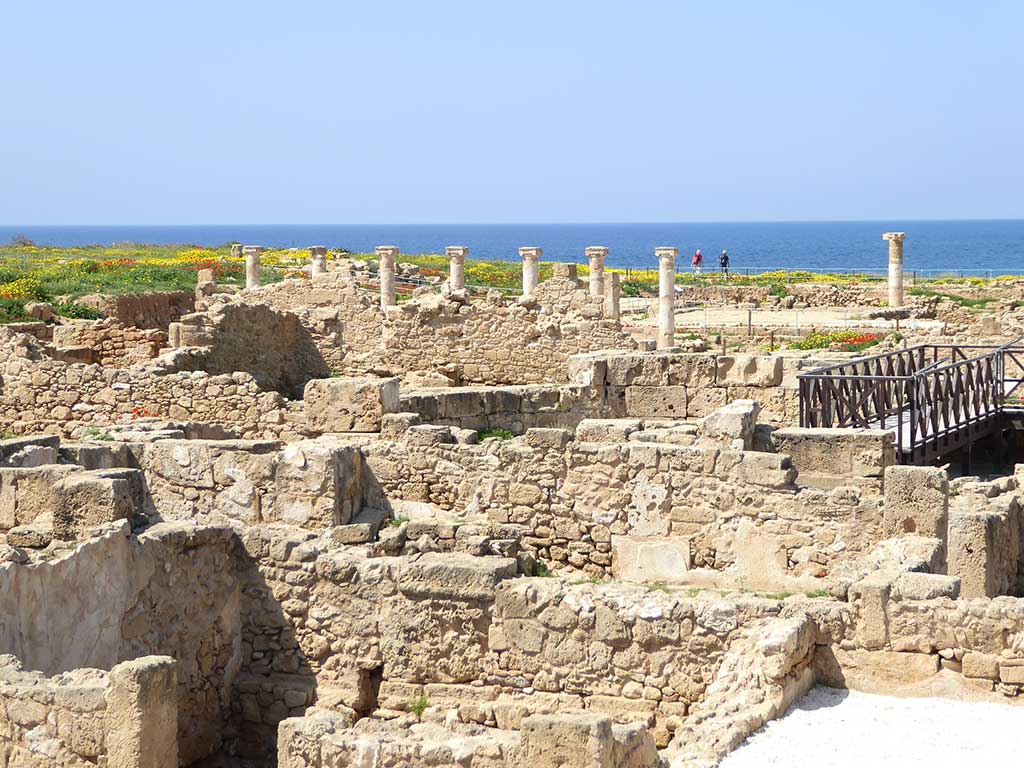
Why Visit Paphos Archaeological Park? If you are staying in Paphos, this is one historic attraction that deserves a place high on your itinerary. Found right at the main seafront it is a UNESCO world heritage site, and also includes the iconic lighthouse. Spend an hour or spend 3 and you will be amazed at what you see. What is Paphos Archaeological Park? Paphos Archaeological Park is one of the most important archaeological sites in Cyprus, covering the remains of ancient Nea Paphos near the modern harbour. The site contains monuments dating from the Hellenistic period through to the Middle Ages, although many of its most impressive remains belong to the Roman period. It is particularly famous for the beautifully preserved mosaic floors of its Roman villas, which depict scenes from Greek mythology and everyday life. Paphos Archaeological Park forms part of the UNESCO World Heritage property of Paphos, recognised for its exceptional archaeological and cultural importance. For visitors, the park offers an opportunity to walk through the remains of an ancient city while enjoying the Mediterranean setting of modern Kato Paphos. Rather than being a single monument, it is a large archaeological landscape containing houses, public buildings, theatres, fortifications, churches and tombs. The History of Paphos Archaeological Park The ancient city of Nea Paphos was established near the harbour towards the end of the 4th century BC. According to the official Cyprus tourism information, Nicocles, the last king of Palaipaphos, moved the city to the area of present-day Kato Paphos. Nea Paphos subsequently became an important political and economic centre and was the capital of Cyprus from the 2nd century BC through much of the Roman period. The location was particularly important because of its harbour and position on the eastern Mediterranean trade routes. Over the centuries, the city developed into a substantial urban centre with wealthy private residences, public buildings and religious monuments. The archaeological remains reveal how the city changed under Hellenistic, Roman and later Christian influence. Earthquakes, changing political circumstances and the gradual decline of the ancient city eventually transformed the landscape, but substantial remains survived beneath the ground and were progressively uncovered through archaeological excavation. Today, the park forms one of the most important archaeological attractions in western Cyprus. The Roman Mosaics The mosaics are undoubtedly the highlight of Paphos Archaeological Park. Four Roman villas – the House of Dionysus, House of Theseus, House of Aion and House of Orpheus – contain some of the site’s most impressive floors. The mosaics use intricate geometric patterns and colourful scenes to depict gods, heroes, mythological stories, animals and scenes from ancient life. The House of Dionysus is particularly famous. Its mosaics include scenes connected with Dionysus, the Greek god of wine, as well as stories from Greek mythology. The House of Theseus is another major attraction, named after a mosaic depicting the mythological hero Theseus. The scale of the villa provides an insight into the wealth and lifestyle of the people who lived in ancient Paphos. What makes these mosaics especially interesting is that they are not simply decorative. They provide clues about the stories, beliefs, artistic traditions and daily life of the people who lived in the city nearly two thousand years ago. The Ancient Theatre The park also contains the remains of the ancient Odeon, a small stone theatre that was used for musical and theatrical performances. The Odeon is one of the more complete ancient structures within the archaeological park and remains an atmospheric place to visit. Its curved seating and stage area give visitors an idea of how public performances would have taken place in ancient Paphos. Nearby are the remains of the Agora, which formed an important public space in the ancient city. Saranta Kolones Another fascinating part of the site is Saranta Kolones, or the Castle of Forty Columns. The fortress takes its name from the numerous granite columns that were incorporated into its construction. Although the medieval castle is now largely ruined, its remains demonstrate the continuing importance of Paphos long after the Roman period. Walking among the fallen columns, walls and arches gives the site a different character from the Roman villas and mosaics. Early Christian Paphos Paphos Archaeological Park is not solely an ancient Greek and Roman site. The remains also demonstrate the development of Christianity on the island. The ruins of the Limeniotissa Basilica are evidence of the city’s early Christian period. The large basilica was decorated with mosaics and formed part of the developing Christian community in Paphos. Other remains around the park show how the city continued to evolve as religious and political circumstances changed. A UNESCO World Heritage Site Paphos was added to the UNESCO World Heritage List in 1980. The UNESCO property includes the archaeological remains of Kato Paphos as well as Palaipaphos at nearby Kouklia. Together, the sites demonstrate the importance of Paphos from antiquity onwards and its long association with the worship of Aphrodite. UNESCO specifically highlights the area’s villas, theatres, fortifications, tombs and exceptional mosaics. The mosaics of Nea Paphos are regarded as particularly significant examples of ancient art. Visiting Paphos Archaeological Park The archaeological park is close to Paphos harbour, making it easy to combine with a visit to the seafront and other attractions in Kato Paphos. Allow at least a couple of hours if you want to explore the main remains properly. The site is extensive, and there is plenty to see beyond the headline mosaics. The Cyprus tourism authorities currently list the site as open throughout the year, with seasonal opening hours. Opening times and admission prices can change, so it is worth checking the latest information before visiting. Why Visit Paphos Archaeological Park? Paphos Archaeological Park is one of those places where the history is easy to visualise. Walking between the remains of ancient villas, standing beside beautifully preserved mosaics and looking towards the Mediterranean gives a real sense of the scale and importance of ancient Paphos. It is also an attraction that works well